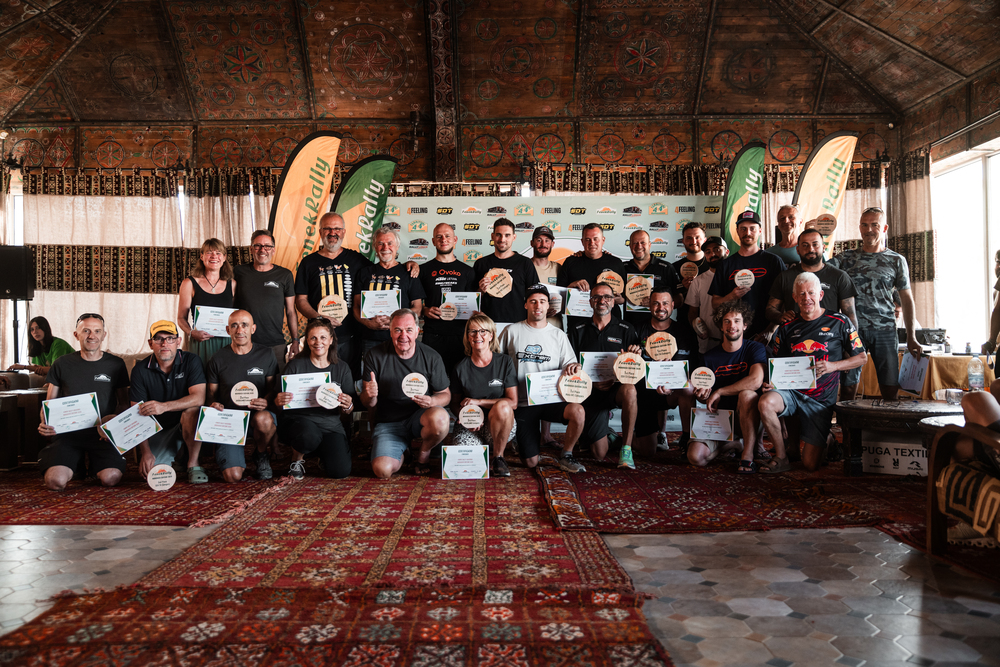
50 international crews ready to tackle nearly 1,300 km in the Moroccan desert
Merzouga (Morocco) – The FenekRally 2026 has officially opened its doors, launching a week of racing today that promises to be among the most thrilling and fiercely contested ever. Around fifty crews are at the starting line for this second event of the year—2026 also saw an initial edition in May—confirming the steady growth of an event now firmly established on the international rally-raid scene. Drivers and navigators from various countries -including Spain, France, Italy, the Netherlands, Great Britain, Switzerland, Germany, and Argentina- launched from the bivouac starting line, ready to challenge sand, rocky terrain, and endless navigation aboard motorcycles, 4×4 vehicles, SSVs, and in the Overland category.
A breathtaking route: adrenaline, navigation and safety
Nearly 1,300 total kilometers of pure challenge, featuring 950 km of special stages for Rally competitors and 973 km dedicated to the Overland category: this is the heart of a route designed to push driving technique, vehicle endurance, and navigational accuracy to the limit. A varied and highly selective course will alternate high-speed tracks, compact sand expanses, treacherous rocky sectors, and off-road passages that demand absolute focus to decode. Framing this great adventure is an impeccable organization: safety remains the absolute top priority, guaranteed by constant real-time satellite tracking of every vehicle and a widespread support network ready to intervene at any moment along the route.
Five stages escalating to the very last kilometer
From Monday, September 14 to Friday, September 18, crews will tackle five uniquely characterized stages with increasing difficulty, alternating fast sections with highly technical zones. Consistency, vehicle management, and chemistry between driver and navigator will be the decisive factors for a leaderboard expected to remain wide open and uncertain until the final kilometer. The last stage -shorter yet extremely delicate – will ultimately lead the competitors to the closing ceremony, officially concluding this unforgettable 2026 edition.
Prologue: a first taste of racing among sand and pitfalls
With administrative and technical checks wrapped up at the Kasbah Hotel Tombouctou in Merzouga, at the foot of Erg Chebbi, today Sunday, September 13the race plunged into the action with the traditional prologue. Following an initial 10 km transfer to warm up the engines, competitors charged into the timed stage. The opening 1.5 km of off-road driving through a sandy riverbed immediately tested off-road handling skills. Up to km 11, a fast track packed with parallel trails and low-visibility passages rewarded navigational precision. The most tense moment came between km 11 and km 14 during a high-concentration off-road section marked by a treacherous “Danger 3” rating. Once past the obstacle, crews rejoined a rocky track featuring a controlled speed zone until hitting the checkered flag at km 26. A final 18 km transfer brought everyone back to the bivouac to take stock of the day.
The prologue begins with instant spectacle
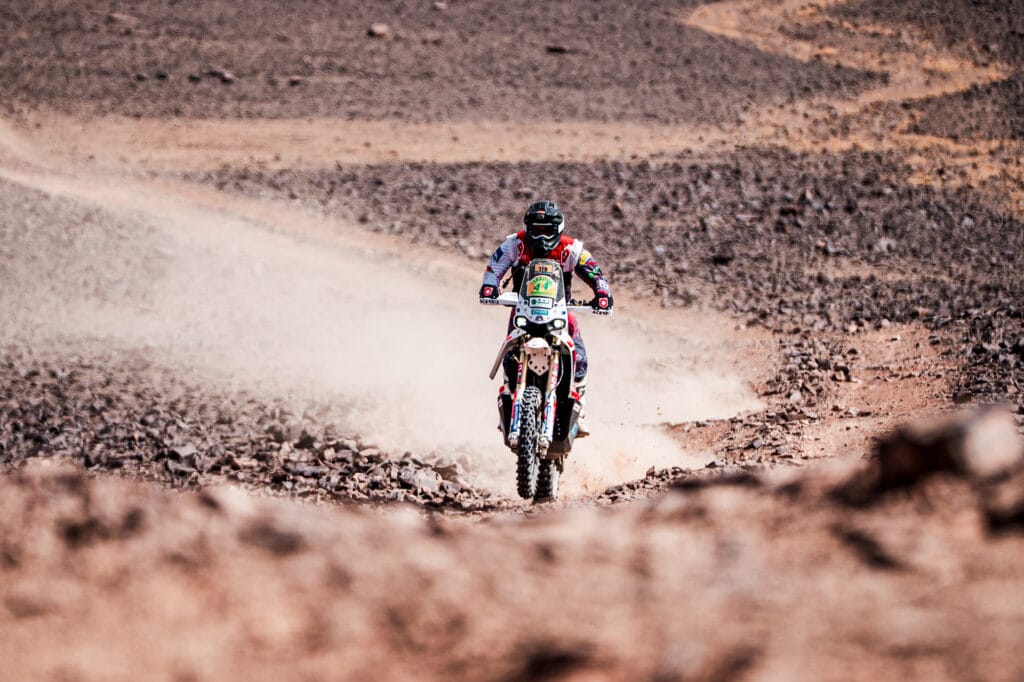
The competition opened under the banner of speed and adrenaline as the prologue rolled out the ribbon, delivering the first clock battles and establishing the provisional standings across bikes, cars, and side-by-sides.
In the premier MT1 class, Spain’s Josep Pedro’ Subirats (#115 Spidi-Pedregà Team) set the pace: riding a KTM 450 EXC-F, he set the fastest time in 20’53”, leaving behind Frenchman Tom Deest (#119 Pays Basque Avventures/KOVE Biarritz) on a Kove 450 Rally and Italian Andrea Gava (#118 Dueruote Racing Team) on a Kawasaki KLE500. In MT2, Max Podesta (#105 Monoblocco Racing Team) claimed victory, crossing the line first aboard a Honda 600XR with a time of 58’29”.
Among T1 off-road vehicles, the Ford of Christian Remond Kobloth and Alain Kevorkian (#203 Sodicars Racing) came out on top, placing first in 42’48”. Completing the team’s celebration was the second-place finish of teammates Richard Gonzalez and Franck Maldonado (#202) in a BRP/Canam X3. In T2 reserved for production vehicles, leadership went to the Mitsubishi Montero of Sergio Simon Macho and Ivan Rodriguez Villarubia (#201 Oregon), who took first place in 1h34’49”.
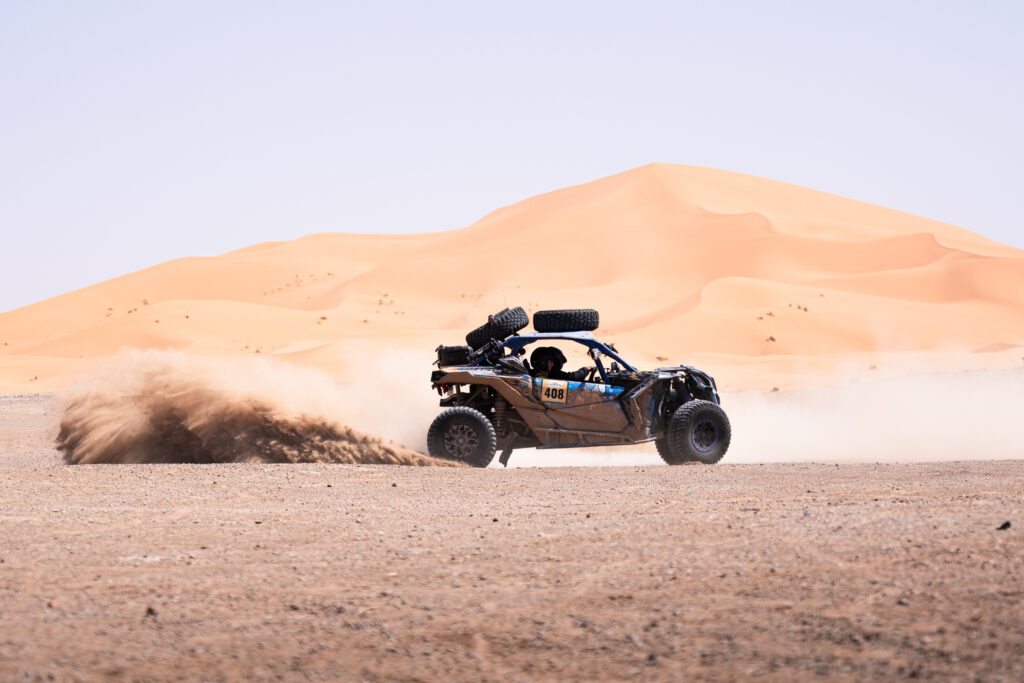
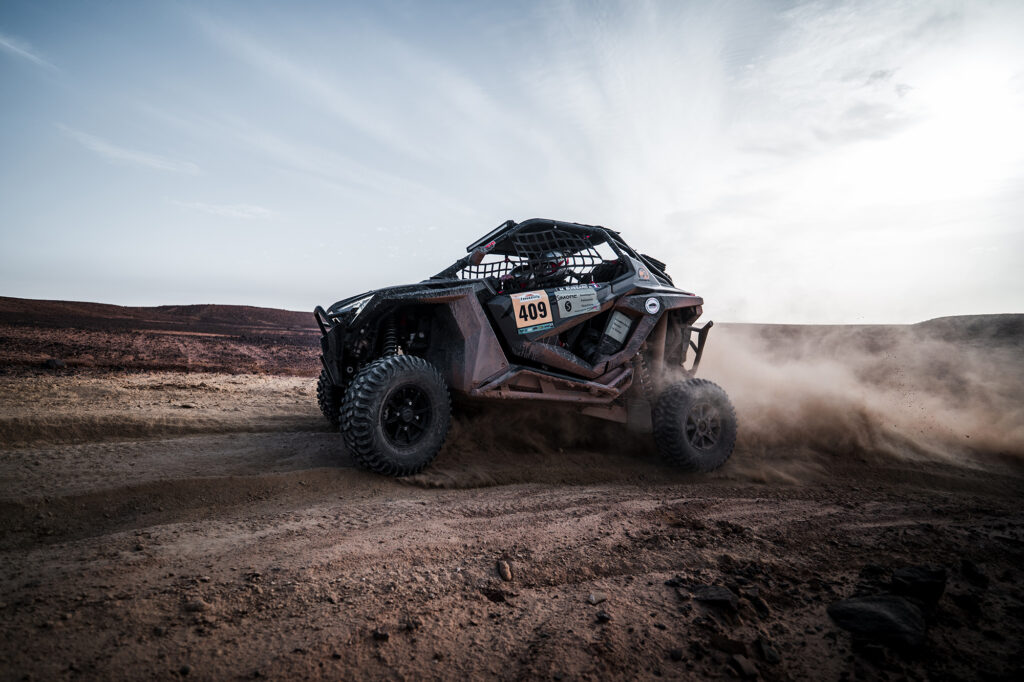
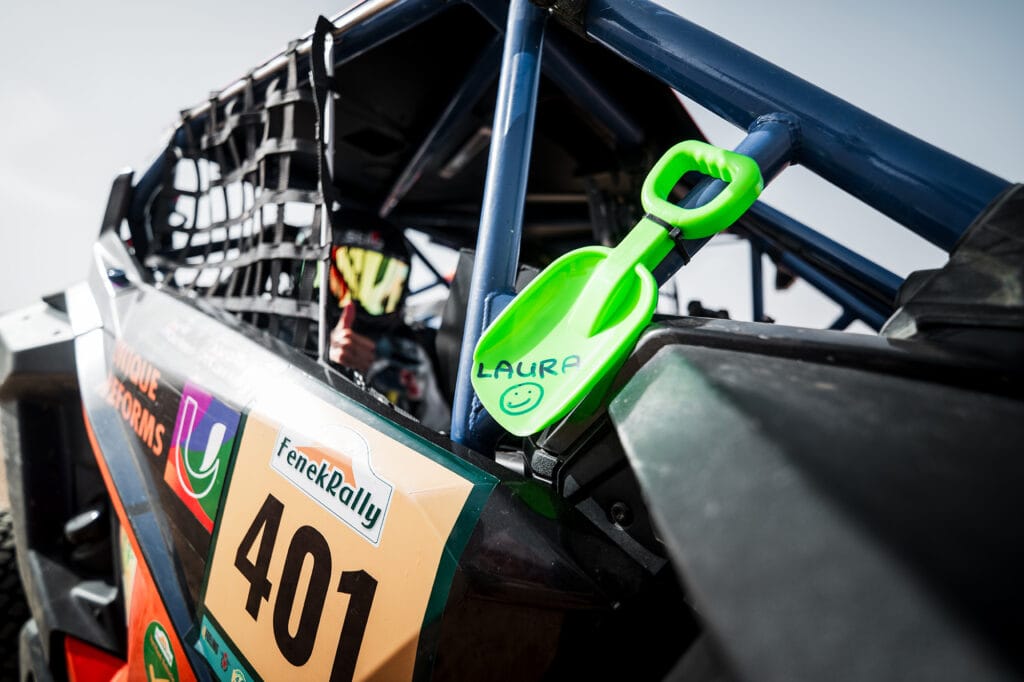
Lightweight vehicles put on a huge show. In T3, top time went to Philon Parpottas and William Paul Chambres (#304 Buzz Racing) in a Polaris PRO R at 27’29”, followed by Philippe Severac and Michel Navarro (#303 Severac Racing) in a SeegWay SX20, and Raf Henri Herman and Daniel Camara (#302 GPR Sport) in a GPR 24. In T4, victory went to Jaume Marcos Tillo’ and Zetta Marcos Ferrer (#408 Pantera Racing) in a BRP Canam Maverick X3 with a time of 26’12”. Completing the podium were David Bernard Fletcher and Laura Patricia Harris (#401 Team Unique Racing) in a Polaris RZR PRO XP, alongside Pedro Garcia Andrés and José Carlos Prats Varillas (#405 PGA Verticalidad) in a Polaris RZR PRO Ultimate.
Absolute balance defined the Overland category, ending with three crews tied for first place (47 points): Andre Trilling and Jolanda de Jong (#601 Dutch Driving Team) in a Yamaha YXZ 1000R, Christian Beyeler and Monika Beyeler-Rohrbach (#604 Sand & Bears) in a Land Rover Defender 300 Tdi 110, and Filippo Franzini (#606 Motor Team Birrone) on a Honda CRF 450 RX Rally.
Stage One: from dunes to rocks, the true clash begins
The real battle with the desert starts tomorrow, Monday, September 14, with the first stage of the FenekRally Original: 262.85 total kilometers, including 206.71 km of special stageFollowing a 48 km transfer, the race will immediately pick up an intense pace across parallel tracks and a tricky road intersection within the first 41 km. From there, competitors will get their first real taste of the dunes (km 41-49) before returning to high speeds until km 75. Between km 75 and km 85, the terrain shifts dramatically—becoming rough and rocky with hazards rated up to Grade 3. After a scheduled 30-minute refuelling stop at km 121, the second half of the race introduces 23 km of intricate navigation on near-invisible tracks, leading into a tough rocky stretch (km 144-152). The final segment demands extreme caution: the last 9 narrow, stone-littered kilometers will lead to the finish line preceded by a reduced-speed zone, closing out a day set to create the first major splits in the field.